Seven blueprint areas, one activity. SAP publishes the scope of this credential across foundations and architecture, warehouse modelling, data acquisition and provisioning, query design and analytics, modelling scenarios with SAP HANA, operations and data lifecycle management, and authorizations and security. Then it assesses all seven through a single System-Based Assessment task.
That mismatch between how wide the scope is and how narrow the assessment looks is the thing candidates find hardest to plan around. You cannot revise for a specific set of items, because there is no set. This walkthrough covers what the C_BW4H exam actually is now, what one System-Based Assessment activity involves, what the seven areas contain, and which release code is the one to study against.
What Is the C_BW4H Certification?
C_BW4H is the exam code for SAP Certified Data Engineer SAP BW/4HANA, an associate level credential covering seven blueprint areas from platform architecture through modelling, data acquisition, query design, HANA integration, operations and security. It is delivered as a System-Based Assessment with a single activity, in English, with a cut score of 69 percent.
The credential sits with the person who builds and runs a BW/4HANA data warehouse rather than the person who reports out of one. Its scope runs from the objects that hold data, through the pipelines that fill them, to the queries that expose them and the authorizations that restrict who sees what. That is a full lifecycle, and it is why the blueprint has seven areas rather than three.
SAP positions it as an entry level qualification for the data engineer profile, describing it as verifying the core skills needed to contribute to a project team in a mentored role. Entry level here means depth of responsibility rather than shallowness of scope, which is a distinction worth holding onto while planning study time. The same data engineer profile has a database-level counterpart in the SAP HANA data engineer exam, which covers data provisioning and calculation views in SAP HANA itself.
What Does One System-Based Assessment Activity Involve?
A System-Based Assessment puts you inside a live style SAP BW/4HANA system and gives you work to do. You carry out guided configuration and execution tasks, and the score comes from what you actually completed rather than from what you selected. C_BW4H is delivered as one such activity, and there is no question bank behind it. The same assessment format now governs newer SAP titles such as the SAP generative AI developer.
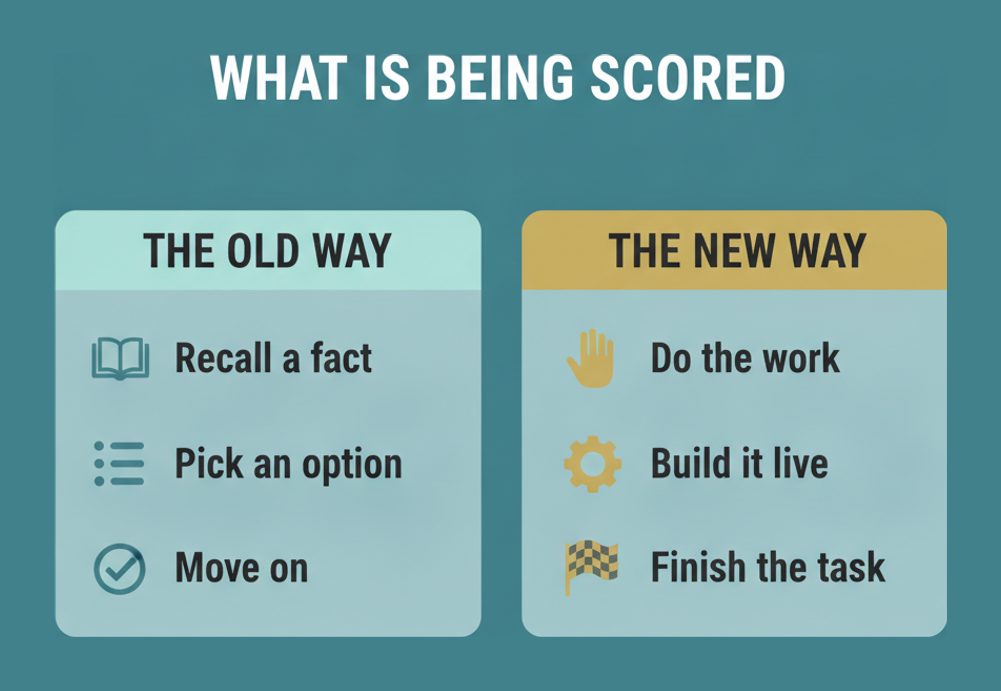
The consequence for preparation is direct. Memorising facts about InfoObjects does not demonstrate that you can create one correctly, and the assessment is only interested in the second thing. Every hour spent reading about a modelling object is worth less than twenty minutes spent building one, which inverts how most people have prepared for SAP certification historically. The same shift applies on the database side, which C_DBADM certification guide works through.
It also changes what breadth means. On a question-based paper, an unfamiliar topic costs you the items that touch it. In a single activity spanning seven areas, an unfamiliar step can block the ones after it, because tasks in a data warehouse are sequential: you cannot load into an object you have not modelled, or query a provider you have not populated.
SAP made this change across its portfolio, and if you last certified under the old format the shift is worth reading about on its own terms before planning anything.
What Are the C_BW4H Exam Details?
C_BW4H is an associate level credential assessed through one System-Based Assessment activity, with a cut score of 69 percent, delivered in English, against the SAP BW/4HANA product. Neither a duration nor an exam fee is published on the money site’s exam pages, and SAP’s own certification page is client-side rendered and returns no specifications to a reader.
| Field | Value |
|---|---|
| Exam name | SAP Certified Data Engineer SAP BW/4HANA |
| Exam code | C_BW4H |
| Level | Associate |
| Assessment type | System-Based Assessment, one activity |
| Cut score | 69 percent |
| Language | English |
| Product | SAP BW/4HANA |
The 69 percent cut score is the number to plan against, and it is set high enough to require command across the whole scope rather than strength in one area. On a task based assessment a cut score behaves differently from a question based one: it reflects how much of the work you completed correctly, so a task abandoned halfway costs more than a question guessed wrongly.
Working through C_BW4H scenario drills is the closest available rehearsal, because a drill asks you to complete the same shape of task rather than to recognise a description of it.
One clarification worth making, because it appears in several places online. Prices quoted alongside preparation material are for that material, not for the SAP assessment itself. No exam fee is published on any page read for this article, so none is stated here.
What Does the C_BW4H Blueprint Cover?
The C_BW4H blueprint publishes seven areas: SAP BW/4HANA foundations and architecture, data warehouse modelling, data acquisition and provisioning, query design and analytics, modelling scenarios and SAP HANA integration, operations and data lifecycle management, and authorizations and security. No percentage weightings are published for any of them.
| Blueprint area | What it is really about |
|---|---|
| Foundations and Architecture | How the platform is put together |
| Data Warehouse Modeling | The objects that hold and structure data |
| Data Acquisition and Provisioning | Getting data in and keeping it current |
| Query Design and Analytics | Exposing data to the people who need it |
| Modeling Scenarios and SAP HANA Integration | Working across BW and native HANA together |
| Operations and Data Lifecycle Management | Running it and deciding what data survives |
| Authorizations and Security | Who is allowed to see which rows |
Read in order, the seven describe a warehouse being built and then lived with. That ordering is useful, because in a task based assessment the sequence in which capabilities depend on each other matters more than the order they appear in a syllabus.
The absence of weightings is genuine rather than an omission by the money site, and it fits the format. A single activity cannot allocate a fixed percentage to each area in the way sixty separate items can, so the honest planning assumption is that any of the seven may be reached.
The platform itself is documented in full on the SAP Help portal, which is the reference for the objects each of these areas names.
Which C_BW4H Release Should You Study?
SAP versions this credential with dated release suffixes, and search demand currently shows the unsuffixed C_BW4H alongside a 2601 release and an older 2505 one. The unsuffixed code is the durable identifier and is how the credential is listed, so it is the one to study against, with the current dated release treated as the content baseline.
The practical risk is not choosing the wrong code. It is picking up material written for a superseded release without noticing. Preparation content built around an older suffix frequently still describes the previous question based format, which no longer applies to this credential at all, so the format itself is a useful freshness test for anything you read.
SAP’s own certification listing is the authoritative place to confirm the current credential, and it can be reached from the SAP credential page. It is worth knowing before you go there that the page renders in the browser rather than serving its details in the source, so a search engine snippet will tell you less about it than a visit will.
Because releases are dated rather than numbered, the sensible habit is to check the credential page shortly before booking rather than at the start of a study block. Two or three months of preparation can span a release boundary.
Where Does the Practice Weight Actually Fall?
SAP publishes no weightings, but the money site publishes something adjacent and useful: how many scenario drills it holds per topic area. Those counts are ERPPrep’s own practice inventory rather than SAP percentages, and they should not be read as a blueprint weighting. They do show where practice material concentrates.
| Topic area | Drills available |
|---|---|
| BW/4HANA Authorizations | 57 |
| Data Acquisition and Provisioning | 54 |
| Query Design | 47 |
| DataStore Objects | 31 |
| InfoObjects and InfoProviders Modeling | 24 |
| Open ODS Views and Field-Based Modeling | 24 |
| Mixed Modeling with SAP HANA | 3 |
Authorizations leading the list is worth pausing on. Row level security in a data warehouse is where a technically correct model becomes an incorrect one for a given user, and it is the area a modeller with a development background is most likely to have avoided. That it also carries the most drills is a reasonable signal about where candidates need repetition.
Mixed modelling with SAP HANA at three drills is the opposite case, and the reason is more likely scope than importance: it is the narrowest of the seven areas rather than the least examinable.
How Much Modelling Does the Exam Really Ask For?
Modelling appears in three of the seven blueprint areas: data warehouse modelling in its own right, modelling scenarios with SAP HANA integration, and by implication inside data acquisition, where the target of a load has to exist before anything can fill it. It is the connective tissue of the whole assessment rather than one topic among seven.
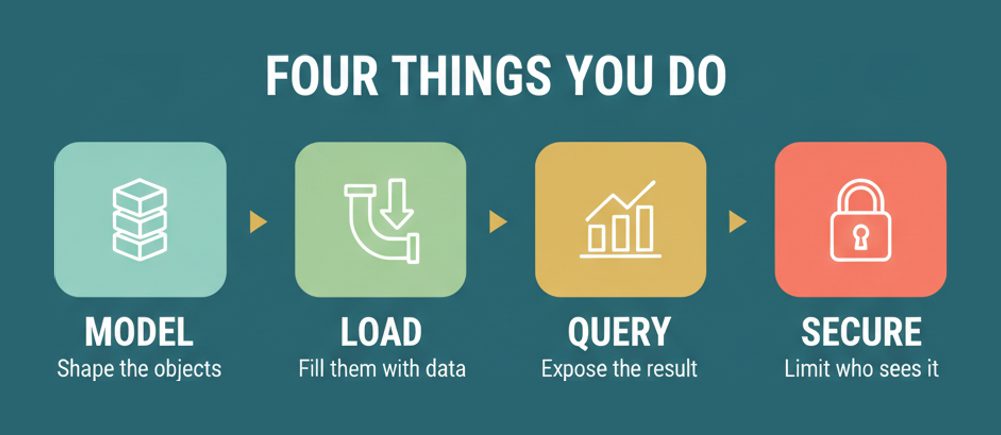
The object vocabulary is where that becomes concrete. InfoObjects define the characteristics and key figures a warehouse reasons about. DataStore objects hold the data. InfoProviders expose it. Open ODS views and field based modelling offer a lighter path that skips some of the traditional object layer entirely, which is why they sit as a named area on the money site’s own breakdown.
Knowing when to use the lighter path is a judgement question rather than a knowledge one, and it is exactly the kind of decision a task based assessment can test that a question cannot. Being asked to make data available is not the same as being asked which object type does what.
The wider discipline this sits inside is data management rather than SAP configuration, and the DAMA body of knowledge is the standard independent reference for the governance, metadata and architecture concepts the operations and authorizations areas assume.
Who Is the Data Engineer Credential For?
The credential is aimed at aspiring and practising data engineers, BW consultants and data analysts working at entry level competence. It suits someone who already works inside a BW or BW/4HANA landscape and wants a verifiable statement that they can build and operate one, rather than someone approaching SAP data warehousing for the first time.
The role itself is well established outside SAP, and independent compensation data for the data engineer role gives a sense of where the general market sits, which is useful context when weighing a certification against the time it takes. Platform specific credentials work best as evidence within a landscape a candidate already operates in.
There is a second audience worth naming: the BW consultant whose last certification predates the format change. For them the value is not the subject, which they know, but the demonstration that they can perform in the current assessment style. That is a different reason to sit an exam and a legitimate one.
For a full picture of the credential’s scope before committing, our earlier BW/4HANA data engineer guide collects the preparation material in one place.
How Should You Prepare for the C_BW4H Exam?
Preparation for C_BW4H should be built around doing rather than reading, because the assessment scores completed work in a live style system. Plan for roughly two to three months alongside a job, and sequence the study so that each capability is built on top of the one it depends on.
- Get access to a BW/4HANA system you can build in, whether through SAP practice systems or a landscape at work, because everything else in this list assumes one.
- Start with foundations and architecture so the object model is clear before you create anything, since a wrong mental model produces work that looks finished and is not.
- Build the modelling layer by hand, creating InfoObjects, DataStore objects and InfoProviders, then repeat until the sequence is automatic rather than looked up.
- Load data into what you built, working through acquisition and provisioning, because a model that has never been filled has not really been tested.
- Design queries over the result so the analytics area is grounded in objects you created rather than in a demo dataset.
- Work authorizations last and hardest, since it carries the largest drill inventory and is the area a modeller is most likely to have avoided in practice.
- Rehearse end to end with scenario drills that ask you to complete a task rather than identify one, and treat any abandoned task as the real gap.
SAP names its own route explicitly, and the Exploring SAP BW/4HANA journey is where its structured material sits. If the assessment format itself is new to you, our SAP certification format guide explains what changed and what it means for how you rehearse.
Frequently Asked Questions
What is the C_BW4H exam?
The exam for SAP Certified Data Engineer SAP BW/4HANA, an associate level credential covering seven blueprint areas across architecture, modelling, data acquisition, query design, HANA integration, operations and security.
How is C_BW4H assessed?
As a System-Based Assessment with a single activity. You carry out guided tasks inside a live style SAP BW/4HANA system, and the score reflects the work you completed rather than options you selected.
What is the cut score for C_BW4H?
Sixty nine percent. It is set high enough to require command across the whole blueprint rather than strength in one or two areas.
How long does the C_BW4H assessment take?
No duration is published on the money site’s exam, study guide or FAQ pages, and SAP’s own certification page renders in the browser and returns no specifications to a reader. Nothing is claimed here that has not been published.
How many blueprint areas does C_BW4H have?
Seven: foundations and architecture, data warehouse modelling, data acquisition and provisioning, query design and analytics, modelling scenarios with SAP HANA, operations and data lifecycle management, and authorizations and security. No weightings are published for them.
Which release of C_BW4H should you study?
The unsuffixed C_BW4H code is the durable identifier, with the current dated release as the content baseline. Check the credential page shortly before booking, since a two to three month study block can cross a release boundary.
How long should you prepare for C_BW4H?
Roughly two to three months alongside employment. The breadth of the blueprint rather than the difficulty of any single area is what sets that timeline.
Which parts of the exam do candidates find hardest?
Data provisioning and modelling scenarios are the areas most commonly reported as difficult, and the overall difficulty is described as moderate, driven mainly by how wide the scope is.
Is C_BW4H available in other languages?
English only at present.
Who should take the C_BW4H certification?
Aspiring and practising data engineers, BW consultants and data analysts working at entry level competence inside a BW or BW/4HANA landscape. It also suits an experienced consultant whose last certification predates the current assessment format.
Conclusion
The C_BW4H exam is a wide blueprint delivered through a narrow assessment. Seven areas covering architecture, modelling, acquisition, query design, HANA integration, operations and authorizations, resolved into one System-Based Assessment activity in English, at a cut score of 69 percent, with no published weightings and no question bank behind it.
Prepare it by building. Model objects until the sequence is automatic, load data into what you built, query the result, and leave authorizations for last and longest because it carries the deepest drill inventory. Then rehearse whole tasks end to end, since the one thing this format punishes is stopping halfway.


